

Bruising After an Injection: Why It Happens and How to Prevent It
A small bruise after a shot usually means the needle nicked a tiny blood vessel. Why some injections bruise, how long the mark lasts, what helps, and when a bruise is worth a call to your provider.
You did everything the same as last time, but this time there's a purple mark where the needle went in. It's a little tender and you're wondering what went wrong.
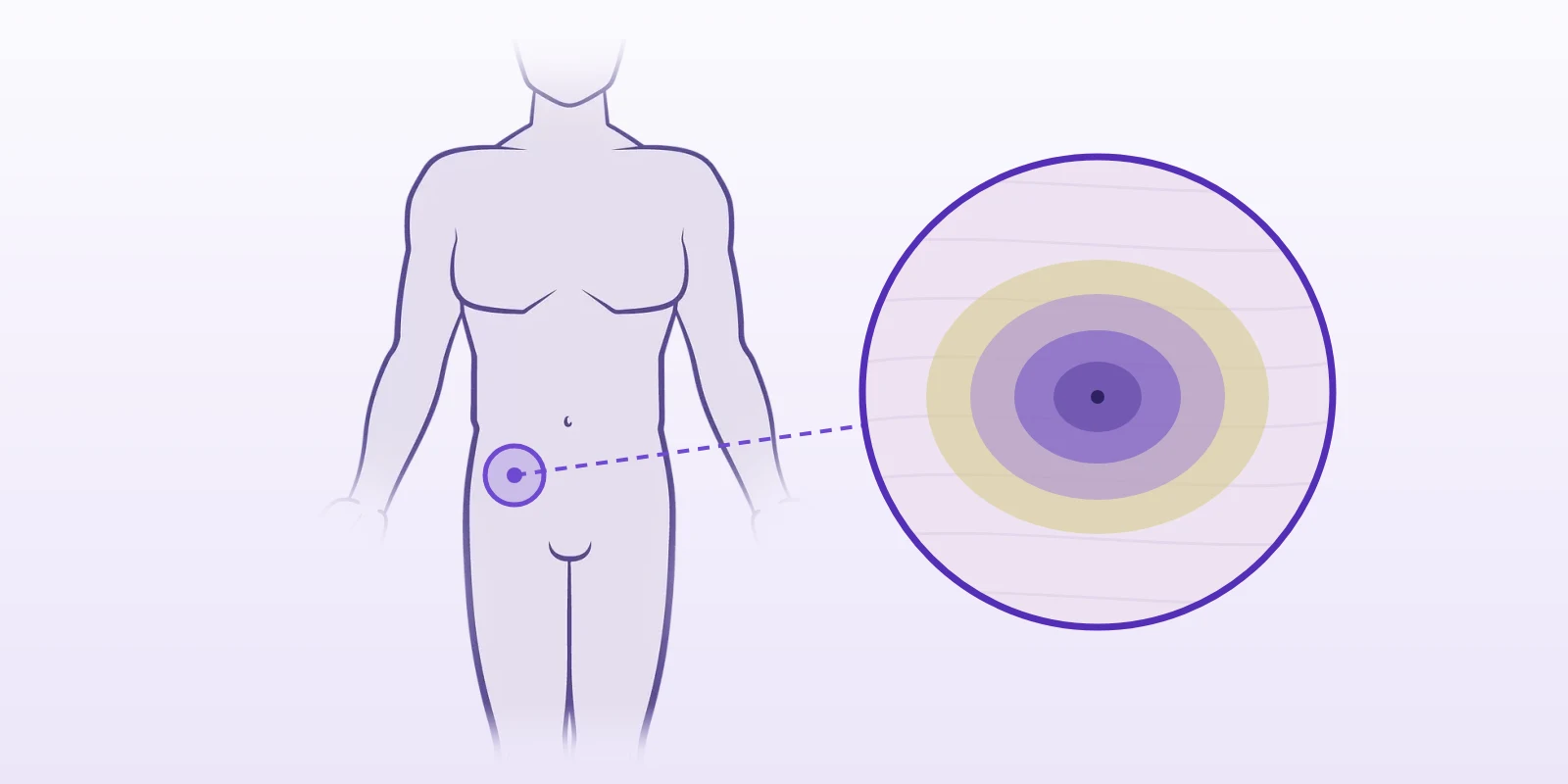
Usually, nothing went wrong. A bruise after an injection almost always means the needle passed through a tiny blood vessel under the skin, and a small amount of blood leaked into the tissue around it. You can't see those vessels, so you can't always avoid them, even with perfect technique.
Most injection bruises are small, harmless and gone within a week or two. This guide explains why they happen, what makes them more likely, how to cut down on them, and when one is worth mentioning to your provider.
Why Injections Bruise
Your skin and the fat under it are full of very small blood vessels called capillaries. When a needle goes in, it sometimes passes through one. A little blood escapes, collects under the skin and shows up as a bruise.
Some areas bruise more easily than others, and some people bruise more easily than others. Things that can make bruising more likely include:
Don't stop any prescribed medicine to reduce bruising. If you think a medicine is making you bruise more, talk to your provider.
How Long Does an Injection Bruise Last?
Most small bruises fade within about one to two weeks. As your body clears the blood, the bruise usually changes color, which is a normal sign of healing.
| Roughly when | What it often looks like |
|---|---|
| First day or two | Red, purple or dark blue, may be tender |
| A few days later | Blue or purple, starting to fade at the edges |
| About a week in | Green or yellow |
| One to two weeks | Yellow-brown, then gone |
What Helps a Bruise Heal
You don't need to do much. A few simple things can make it more comfortable:
How to Reduce Bruising Next Time
You can't avoid every blood vessel, but these habits make bruises less common.
Let the alcohol dry. Wait until the skin is completely dry after you swab it.
Pick a calm spot. Avoid areas with visible veins, scars, moles or skin that's already bruised or irritated. Most guides also say to stay about 2 inches away from your belly button. Our subcutaneous injection sites guide covers where each site is.
Use the technique you were taught. That includes the pinch, if you were shown one, and the angle. Our guide to pinching the skin for a subcutaneous injection explains why the pinch matters.
Keep the needle still. Hold the syringe steady while you inject, then pull it straight out at the same angle it went in.
Press, don't rub. After you take the needle out, press gently on the spot with a clean gauze pad or cotton ball for a few seconds. Check your medication's leaflet too, because some say not to rub the site at all.
Use a new needle every time. A used needle is duller and does more damage on the way in.
Rotate your sites. Each injection should be about an inch away from the last. A rotation chart makes this easy to keep up.
Optimize Your Peptide Therapy Journey
Take control of your peptide therapy with PeptideKit - the comprehensive app designed to help you track, monitor, and optimize your treatment:
- Add peptide therapy protocols with custom schedules that work for you
- Easy dose logging with customizable reminder notifications
- Body change tracking to monitor your transformation
- Progress visualization with charts and trend analysis

Scan with your iPhone camera
to download PeptideKit
Bruise or Something Else?
A normal injection bruise is flat or only slightly raised, a little tender, and slowly fades. A few things look similar but are worth telling apart.
A lump with a bruise. If blood collects in a small pocket, you can get a firm, tender lump along with the bruise. Small ones usually go down on their own. Our guide to lumps after an injection covers the other kinds of bumps you might see.
Redness that spreads. A bruise doesn't usually get bigger, warmer and redder after the first day. Spreading redness and warmth can be a sign of infection rather than a bruise.
A drop of blood at the site. That's common and usually stops in a few seconds. Our guide to bleeding after an injection explains what's normal.
When to Call Your Provider
Most injection bruises are nothing to worry about, but get in touch with your provider if:
Get emergency help for any signs of an allergic reaction, like trouble breathing or swelling of your face, lips or throat.
Track It to Spot the Pattern
One bruise doesn't tell you much. Ten bruises in the same spot tells you a lot. Writing down the site of every shot, and any bruise that follows, turns a vague worry into a pattern you can actually do something about.
A printable injection log has space for this. If you prefer your phone, PeptideKit lets you tap the site on a body map when you log each shot, so you can see where recent bruises have come from and choose a different area next time.
Frequently Asked Questions
Is it normal to bruise after an injection?
Yes. Bruising is one of the most common things people notice after an injection. It usually means the needle passed through a tiny blood vessel, and it doesn't mean the injection went wrong.
How long does a bruise from an injection last?
Most injection bruises fade within about one to two weeks. They often change from red or purple to green and yellow as they heal.
Does a bruise mean the medication didn't work?
Usually not. A small bruise is about a nicked blood vessel near the injection, not about where the medication ended up. If you're ever unsure whether you got your full dose, ask your pharmacist rather than taking more.
Why do I bruise more in some spots than others?
Some areas have more small blood vessels near the surface, and skin thickness varies around the body. Noting which sites bruise most in your log can help you and your provider choose better ones.
Should I put ice on an injection bruise?
A cool compress wrapped in a cloth can ease tenderness in the first day or so. Don't put ice directly on your skin.
When is bruising after an injection a concern?
Call your provider if the bruise keeps growing, has a large painful lump under it, becomes hot or red with spreading redness, or if you're bruising easily in other places for no clear reason.
The Bottom Line
A bruise after an injection usually just means the needle found a tiny blood vessel. It fades on its own within a week or two. Keep the needle still, press gently instead of rubbing, use a new needle and rotate your sites, and you'll see fewer of them.
If bruises keep coming back, or one looks very different from the usual, write it down and let your provider know.
Always consult with qualified healthcare professionals before starting any peptide therapy protocol. This information is for educational purposes only and does not constitute medical advice.
Related Articles
Lump After an Injection: Is a Bump Under the Skin Normal?
Why a small lump can appear after a subcutaneous injection, how long it usually lasts, what helps it settle, and the signs that mean you should call your provider.
How to Remember a Weekly Injection (and Know If You Already Did It)
Weekly shots are easy to forget because they never turn into a daily habit. Simple ways to remember your injection day, check whether you've already done it, and keep your place when life gets busy.